You must be signed in to read the rest of this article.
Registration on CDEWorld is free. Sign up today!
Forgot your password? Click Here!
Artificial intelligence (AI) is no longer a theoretical consideration for dentistry. AI-enabled tools now reach dental practices through radiographic analysis, diagnostic support, treatment planning, clinical documentation, patient communication, scheduling, and insurance workflows.1,2 The American Dental Association (ADA) has published an overview of AI uses across clinical and administrative domains and has begun issuing formal standards—currently focused on AI-based analysis of 2-dimensional dental images—addressing validation and evaluation.3-5 The US Food and Drug Administration (FDA), meanwhile, maintains a continually updated list of AI-enabled medical devices that have satisfied premarket requirements6 and has developed regulatory approaches for the distinctive lifecycle of AI-enabled software.7
In Part 1 of this series (published in the September 2026 issue of Compendium), the authors asked whether the growing accuracy, accessibility, and acceptance of AI could eventually influence what is considered the standard of care.8 That question leads to a more immediate, practical one: how should dentists integrate AI into clinical practice today? The two concepts differ in a useful way. The standard of care concerns the level of professional care reasonably expected under particular clinical circumstances; the standard of practice, as used here, concerns the processes, safeguards, and professional behaviors clinicians should employ when bringing AI into patient care.
Dentistry does not simply need more AI adoption. It needs a framework for responsible integration, built on one premise: AI may assist the dentist, but it does not replace the dentist’s responsibility for patient care.
How This Framework Was Developed
The framework presented here is based on a narrative (nonsystematic) review of peer-reviewed literature identified through PubMed searches conducted through August 2026, together with regulatory documents, ADA standards activity, and international ethics guidance cited throughout. The 10 domains were derived thematically from recurring safeguards described in these sources and refined by author discussion until consensus was reached. The framework reflects the authors’ synthesis and clinical judgment; it has not undergone formal external validation, a point revisited under “Limitations.”
From AI Adoption to Responsible AI Integration
Purchasing an AI-enabled product is not the same as integrating it well. Adoption occurs when a practice acquires or activates a technology. Responsible integration occurs when clinicians understand what the technology does and where it fails, decide where it fits in the workflow, establish safeguards, communicate with patients, protect patient information, and keep evaluating performance over time.
The distinction matters because performance among dental AI systems is not uniform. A 2025 systematic review and meta-analysis of AI platforms for caries detection found substantial variability across platforms and studies—performance shown by one algorithm cannot simply be assumed for another.9,10 The ADA has responded with standardization efforts: ANSI/ADA Standard No. 1110-1:2025 provides validation dataset guidance for AI-based dental image analysis, and ADA Technical Report No. 1109:2025 emphasizes independent datasets, external validation, safety, avoidance of bias, privacy, and security.4,5 Regulatory authorization or inclusion in popular dental software is therefore not evidence that every output is correct for every patient. AI is best treated as clinical decision support, with the dentist as the final interpreter of the patient’s clinical information.
A Proposed Standard-of-Practice Framework for Clinical AI
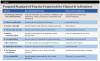
The proposed framework comprises 10 domains (Table 1), each described below.
1. Select and Understand the Technology
Dentists are expected to understand the instruments, materials, and imaging systems they use, and AI deserves the same expectation. While they need not become data scientists, at a minimum dentists should understand a number of basic issues, including: the system’s intended clinical purpose and the type of information or images it analyzes; what its output actually represents, including reported sensitivity and specificity; the populations and clinical settings in which it was developed and validated; its known limitations and the circumstances associated with false-positive or false-negative rates; its regulatory status, when applicable; and whether independent evidence supports the way the practice intends to use it.
Interpreting performance claims requires some care. A system’s positive predictive value depends heavily on disease prevalence in the population examined, so an algorithm validated in a high-prevalence setting may generate frequent false alarms in a low-risk recall population; external validation in settings comparable to one’s own practice carries more weight than developer-reported accuracy alone.4,5 The FDA’s approach to AI-enabled devices reinforces the same themes of intended use, validation, and lifecycle management.6,7 The useful question is not “Does this AI work?” but rather “What does it do well, where does it fail, and how should its output influence—without determining—my judgment?”
2. Independently Verify AI Findings
One of the most consequential risks of clinical AI is automation bias: the human tendency to accept automated recommendations even when other information contradicts them. Empirical studies in healthcare decision support have shown that incorrect AI suggestions measurably degrade professional performance, an effect observed in radiologists across experience levels.11,12
The implication for dentistry is direct: an AI output should never automatically become a diagnosis. When a system flags suspected interproximal caries, periodontal bone loss, or periapical pathology, the dentist should correlate the finding with history, clinical examination, imaging, risk profile, and previous records. AI can identify; the dentist must verify. The reverse also holds. If AI finds nothing, the clinician cannot assume disease is absent, because false negatives occur and published performance varies widely across algorithms, imaging modalities, and clinical conditions.9,13 The dentist’s independent assessment remains the safeguard between an algorithmic output and a clinical intervention.
3. Maintain Meaningful Human Oversight
AI may analyze images, calculate probabilities, generate text, or summarize records. A qualified professional should nonetheless remain responsible for interpreting that information for the individual patient. Responsibilities that should stay with the dentist include: diagnosis and treatment planning; referrals and treatment recommendations; informed consent discussions; decisions to intervene or to monitor; and interpretation of conflicting information.
The desired relationship is not AI → decision → dentist approval, but rather patient information → AI assistance plus independent clinical evaluation → dentist judgment → shared decision with the patient. The ADA has likewise emphasized that human expertise remains essential as AI becomes integrated into dentistry.3
4. Protect Privacy, Confidentiality, and Patient Data
Dental records are highly sensitive: radiographs, cone-beam computed tomography scans, photographs, intraoral scans, and medical histories. Responsible integration requires knowing what happens to these data when they meet an AI platform.14 Under HIPAA, a US practice transmitting electronic protected health information to a cloud-based AI vendor generally needs a business associate agreement and should account for the arrangement in its security risk analysis.15 Before using an AI system with patient information, a practice should determine: where data are transmitted and stored, and whether they are encrypted; whether identifiable information leaves the practice environment; whether patient data may be used to train or improve the model; whether data are shared with third parties, how long they are retained, and whether they can be deleted; and what contractual protections exist and whether use complies with applicable privacy, security, and institutional requirements.
General-purpose generative AI systems deserve particular caution, since their data handling may not be designed for protected health information.16 Identifiable patient information should not be entered into such systems unless the practice has determined the use is appropriate and compliant. Convenience should never override confidentiality.
5. Communicate Transparently With Patients
AI can strengthen patient communication. Enhanced radiographic visualization may help patients see findings that are hard to appreciate on conventional images, and surveys suggest patients are generally receptive to dental AI—provided the dentist stays in control of decisions.17 Technological assistance should not diminish transparency, however. When AI meaningfully contributes to diagnosis or treatment planning, the dentist should consider what level of disclosure is appropriate; ethical frameworks for dental AI consistently stress autonomy, transparency, accountability, and equity,18-21 and consent for AI-assisted care is drawing increasing attention.22
The level of patient communication should reflect the role AI plays in care. AI used primarily in the background for administrative or workflow support, without materially influencing a clinical decision, may warrant a different level of disclosure than AI that contributes directly to interpretation, diagnosis, treatment recommendations, or other clinical decisions. When AI has a meaningful clinical role, transparency should be proportionate to its clinical significance so that patients understand both what the technology contributed and that the treating dentist retains final professional judgment.23
A clinician might say to a patient: “We use an AI-assisted system as an additional tool when reviewing your radiographs. It helps identify areas that may deserve closer attention, but I review your images and examination findings myself and make the final determination.” Two principles are embedded in this statement: AI contributes information; the dentist makes the clinical decision.
6. Document Clinically Meaningful AI Use
When AI materially contributes to a decision, the record should capture the dentist’s interpretation rather than merely reproduce the algorithm’s output—for instance, noting that AI-assisted analysis highlighted an area for evaluation and that the dentist confirmed, or rejected, the finding on clinical and radiographic grounds. The record should reflect that the dentist considered the AI-generated information, independently evaluated the patient, reached a professional conclusion, and acted on the totality of available information. These are suggested best practices rather than legal documentation requirements, which vary by jurisdiction. The goal is not to log every interaction with an algorithm but to document the clinical reasoning, not merely the technology.
7. Recognize Bias, Generalizability, and Uncertainty
AI systems learn from data, and healthcare datasets are rarely fully representative; the limited public availability of diverse, well-annotated dental images datasets further constrains external validation.24 Performance can vary with demographic representation, disease prevalence, image quality and equipment, clinical setting, annotation methodology, and algorithm design. The ADA’s standards work treats validation datasets, data quality, and bias as central concerns for dental images analysis systems,4,5 and international guidance similarly emphasizes fairness, transparency, and governance.25 What follows is informed clinical skepticism—not distrust of AI, but recognition that an algorithmic output, like any diagnostic information, has limits and must be interpreted in context.
8. Separate Detection From Treatment
AI’s ability to surface subtle findings is among its greatest benefits and, paradoxically, its utmost risks: detection can slide into an automatic indication for intervention. The stakes are highest in cariology and periodontics, where contemporary management runs along a continuum of prevention, risk modification, remineralization, surveillance, minimally invasive care, and definitive treatment.26 A highlighted radiographic feature does not establish that disease is active, progressing, clinically significant, or deserving of a particular treatment. An AI finding is not automatically a treatment indication. Disease activity, risk, symptoms, clinical findings, patient preferences, and prognosis must continue to drive treatment decisions. AI may help clinicians see more; deciding what those findings mean remains clinical work.
9. Monitor AI After Implementation
Unlike a curing light or a handpiece, for example, an AI product may change after purchase: algorithms get updated, interfaces change, new data shift model behavior. The FDA has addressed planned post-market modifications through predetermined change control plans described in the marketing submission.7 Implementation is therefore not a one-time decision. Practices should periodically ask whether the technology still performs as expected, whether updates have changed functionality, whether recurring errors or new evidence have appeared, and whether the team needs additional training. AI competency is an ongoing professional responsibility, not a single educational event.
10. Preserve Professional Accountability
The most important principle is the simplest: the dentist remains responsible for the patient. Responsibility for a clinical decision should not be presumed to shift to a developer, vendor, or algorithm because AI contributed to the process. When AI output conflicts with clinical judgment, the dentist decides which interpretation is appropriate; when the dentist accepts an AI recommendation, that decision should be defensible on the patient’s clinical circumstances—not because “the AI recommended it.” Ethical frameworks for dental AI consistently identify responsibility and accountability as core principles.18-21 To be clear, this is a statement about professional and clinical responsibility, not legal liability: manufacturers, developers, and healthcare organizations carry obligations of their own, and the legal allocation of responsibility for AI-assisted care varies by jurisdiction and is still evolving. Within the operatory, however, professional accountability remains human.
The AI Clinical Integration Cycle
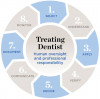
To bring these domains into daily workflow, the authors propose an eight-stage cycle (Figure 1): select → understand → apply → verify → decide → communicate → document → monitor.
1. Select a system appropriate for the intended clinical purpose, weighing evidence, regulatory status, privacy safeguards, and validation.
2. Understand what the technology was designed to do, how to interpret its output, and where its limitations lie.
3. Apply it within its intended clinical context and established workflow.
4. Verify its output against the patient’s history, examination, imaging, and risk factors.
5. Decide through independent professional judgment—diagnosis, treatment, referral, or monitoring.
6. Communicate clinically meaningful findings and, when appropriate, the role AI played.
7. Document the clinician’s interpretation, reasoning, and patient discussions, not merely the automated output.
8. Monitor performance, updates, errors, and emerging evidence over time.
The cycle repeats as technology, evidence, and professional standards evolve. At chairside, it condenses into five questions for the clinician: Is this system appropriate for this purpose and this patient? Does the finding agree with my independent assessment? Would I make the same treatment decision without the AI overlay? Can I explain to the patient what the AI contributed and what I concluded? Have I documented my reasoning rather than the algorithm’s conclusion?
What Should a Practice Do Before Implementing AI?
Responsible implementation extends beyond the individual dentist. Before deployment, a practice or organization should be able to answer 10 questions:
- Validation: Is there credible evidence for the intended use?
- Regulatory status: Has appropriate review occurred where required?
- Privacy: How are data transmitted, stored, protected, and reused?
- Workflow: Where does AI enter the process, and who reviews its output?
- Training: Has the team been educated on AI use and limitations?
- Patient communication: How will AI’s role be explained when relevant?
- Documentation: What AI-related information belongs in the record?
- Error management: What happens when AI and clinician disagree?
- Monitoring: Who reviews updates, errors, and new evidence?
- Accountability: Is it clear that the treating dentist retains responsibility?
Answers to these questions may eventually form the basis of institutional AI policies in practices, dental schools, and healthcare organizations.
AI Competency as Professional Competency
Should AI literacy become part of professional competency in dentistry? There is growing reason to think so. The profession has absorbed digital radiography, cone-beam imaging, intraoral scanning, and CAD/CAM, but AI differs in one respect: it can directly influence interpretation and decision-making. A recently proposed competency framework for undergraduate dental education organizes AI competency into fundamentals, implementation, and ethical and professional conduct.27 Future dentists should be able to interpret algorithmic outputs and their uncertainty, identify potential bias, protect patient information, recognize automation bias and hallucinated generative AI content (still a documented risk even in advanced systems28), maintain independent diagnostic skills, and accept responsibility for AI-assisted decisions. The goal is not to have dentists who are AI engineers, but who are informed, critical, ethical users of AI.
Limitations
This framework is a proposal, not an established standard. It rests on a narrative rather than systematic review, and its domains were derived by author consensus without external validation, Delphi methodology, or field testing. The regulatory environment it describes, including FDA guidance, ADA standards activity, and international frameworks, is changing quickly, and several cited documents apply specifically to 2-dimensional image analysis rather than to all dental AI. The discussion is written primarily from a US regulatory perspective, and none of it constitutes legal advice. Empirical evaluation of whether frameworks such as this one improve clinical outcomes remains an open research need.
Conclusion
AI has real potential to improve dentistry through sharper diagnostics, better communication, greater efficiency, and patterns surfaced that clinicians might miss. Its value, though, will depend less on the sophistication of the technology than on how responsibly it enters patient care, through the 10 domains of discipline summarized in Table 1.
Part 1 of this series asked how AI might change what dentists are expected to know and do; this article asks how dentists should use AI today. The two questions are connected. Practices that begin as recommendations can become professional norms, then expectations of competency, and eventually factors in how the standard of care itself is interpreted. The profession can define responsible AI integration proactively—or wait for adverse events, litigation, and regulation to define it retrospectively. AI should enhance clinical judgment, not replace it. Establishing a responsible standard of practice now offers the best chance that the growing partnership between clinicians and AI strengthens what sits at the center of dental care: clinical judgment, patient trust, and patient safety.
ABOUT THE AUTHORS
Ronald D. Perry, DMD, MS
Professor, Department of Comprehensive Care, and Director, International Student Program, Tufts University School of Dental Medicine, Boston, Massachusetts
Driss Zoukhri, PhD
Professor, Department of Comprehensive Care, Tufts University School of Dental Medicine, Boston, Massachusetts
Volodymyr Kachmar, DMD Candidate
International Dental Student Program, Tufts University School of Dental Medicine, Boston, Massachusetts
Enxhi Subashi, DMD Candidate
International Dental Student Program, Tufts University School of Dental Medicine, Boston, Massachusetts
Queries to the author regarding this course may be submitted to authorqueries@aegisdental.com.
REFERENCES
1. Schwendicke F, Samek W, Krois J. Artificial intelligence in dentistry: chances and challenges. J Dent Res. 2020;99(7):769-774.
2. Rahim A, Khatoon R, Khan TA, et al. Artificial intelligence-powered dentistry: probing the potential, challenges, and ethicality of artificial intelligence in dentistry. Digit Health. 2024;10:20552076241291345.
3. American Dental Association. ADA SCDI White Paper No. 1106. Dentistry—Overview of Augmented and Artificial Intelligence Uses in Dentistry. Chicago, IL: American Dental Association; 2022.
4. American Dental Association. ANSI/ADA Standard No. 1110-1. Dentistry—Validation Dataset Guidance for Image Analysis Systems Using Artificial Intelligence, Part 1: Image Annotation and Data Collection. Chicago, IL: American Dental Association; 2025.
5. American Dental Association. ADA Technical Report No. 1109. Dentistry—Evaluation of Dental Image Analysis Systems Using Augmented/Artificial Intelligence. Chicago, IL: American Dental Association; 2025.
6. US Food and Drug Administration. List of artificial intelligence-enabled medical devices. FDA website. Updated September 4, 2026. https://www.fda.gov/medical-devices/software-medical-device-samd/artificial-intelligence-enabled-medical-devices. Accessed September 30, 2026.
7. US Food and Drug Administration. Marketing Submission Recommendations for a Predetermined Change Control Plan for Artificial Intelligence-Enabled Device Software Functions: Guidance for Industry and Food and Drug Administration Staff. Silver Spring, MD: US Food and Drug Administration; August 2025.
8. Perry RD, Zoukhri D, Kachmar V, Subashi E. Artificial intelligence and the evolving standard of care in dentistry. Compend Contin Educ Dent. 2026;47(6):268-275.
9. Abbott LP, Saikia A, Anthonappa RP. Artificial intelligence platforms in dental caries detection: a systematic review and meta-analysis. J Evid Based Dent Pract. 2025;25(1):102077.
10. Gugnani N, Gugnani S. AI for caries detection: how close are we to clinical use? Evid Based Dent. 2026;27(1):8-9.
11. Kücking F, Hübner U, Przysucha M, et al. Automation bias in AI-decision support: results from an empirical study. Stud Health Technol Inform. 2024;317:298-304.
12. Dratsch T, Chen X, Rezazade Mehrizi M, et al. Automation bias in mammography: the impact of artificial intelligence BI-RADS suggestions on reader performance. Radiology. 2023;307(4):e222176.
13. Khubrani YH, Thomas D, Slator PJ, et al. Detection of periodontal bone loss and periodontitis from 2D dental radiographs via machine learning and deep learning: systematic review employing APPRAISE-AI and meta-analysis. Dentomaxillofac Radiol. 2025;54(2):89-108.
14. Brinz J, Eslamiamirabadi N, Salamati A, et al. Data sharing for responsible artificial intelligence in dentistry: a narrative review of legal frameworks and privacy-preserving techniques. J Dent. 2025;163:106130.
15. US Department of Health and Human Services, Office for Civil Rights. Guidance on HIPAA & cloud computing. HHS website. Updated December 23, 2022. https://www.hhs.gov/hipaa/for-professionals/special-topics/health-information-technology/cloud-computing/index.html. Accessed September 30, 2026.
16. Eggmann F, Weiger R, Zitzmann NU, Blatz MB. Implications of large language models such as ChatGPT for dental medicine. J Esthet Restor Dent. 2023;35(7):1098-1102.
17. Ayad N, Schwendicke F, Krois J, et al. Patients’ perspectives on the use of artificial intelligence in dentistry: a regional survey. Head Face Med. 2023;19(1):23.
18. Rokhshad R, Ducret M, Chaurasia A, et al. Ethical considerations on artificial intelligence in dentistry: a framework and checklist. J Dent. 2023;135:104593.
19. Mörch CM, Atsu S, Cai W, et al. Artificial intelligence and ethics in dentistry: a scoping review. J Dent Res. 2021;100(13):1452-1460.
20. Bailey MA. Ethical considerations for the integration of artificial and augmented intelligence in dentistry: navigating the landscape and preparing for the future. J Am Dent Assoc. 2024;155(8):721-722.
21. Duggal I, Tripathi T. Ethical principles in dental healthcare: relevance in the current technological era of artificial intelligence. J Oral Biol Craniofac Res. 2024;14(3):317-321.
22. Roganović J. Consent for artificial intelligence in dentistry. J Am Dent Assoc. 2025;156(1):6-7.
23. Rose SL, Shapiro RS. An ethically supported framework for determining patient notification and informed consent practices when using artificial intelligence in health care. Chest. 2024;166(3):572-578.
24. Uribe SE, Issa J, Sohrabniya F, et al. Publicly available dental image datasets for artificial intelligence. J Dent Res. 2024;103(13):1365-1374.
25. World Health Organization. Ethics and governance of artificial intelligence for health: Guidance on large multi-modal models. Geneva, Switzerland: World Health Organization; 2024.
26. Schwendicke F, Splieth C, Breschi L, et al. When to intervene in the caries process? An expert Delphi consensus statement. Clin Oral Investig. 2019;23(10):3691-3703.
27. Chuenjitwongsa S, Arunratanothai T, Rokaya D, et al. Developing a competency framework for artificial intelligence in undergraduate dental education. Front Dent Med. 2026;7:1849000.
28. Draelos RL, Afreen S, Blasko B, et al. Large language models provide unsafe answers to patient-posed medical questions. NPJ Digit Med. 2026;9(1):241.