You must be signed in to read the rest of this article.
Registration on CDEWorld is free. Sign up today!
Forgot your password? Click Here!
Orofacial myofunctional disorders (OMD) are abnormalities of the face, mouth, and throat muscles. These abnormalities can impact formation of the stomatognathic system, occlusion, and orofacial functions, such as chewing, swallowing, and speech.1 Approximately 38% of the general population is affected by OMD.2 Furthermore, 81%, or four out of five children who have speech/articulation delays have an OMD.2 Given the prevalence of these disorders, there is a need for dental professionals to increase their familiarity with them to implement an interprofessional approach, enhance patient care, and improve health outcomes. Undiagnosed and untreated, these abnormalities may lead to issues with speech development and oral health thereby affecting systemic health and overall quality of life.
These abnormalities are located in regions assessed by dentists as well as dental hygienists. Additionally, patients visit their dental providers multiple times a year, placing them in a unique position to help care for patients with these disorders. Assessment findings can be used for optimal patient management. This includes an interdisciplinary approach involving collaboration with speech-language pathologists, orofacial myologists, otolaryngologists, and orthodontists, just to name a few. Heightened familiarity with OMD and screening protocols can assist in educating patients and addressing this condition.
Signs and Symptoms
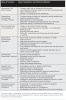
There are many signs and symptoms indicative of orofacial myofunctional disorders related to the anatomy and function of the structures of the oral cavity, head, and neck region. Consistent open mouth/lips apart at rest, ankyloglossia, malocclusion, and abnormal tongue position can present in an individual with OMD.3 Challenges with pronouncing specific sounds, drooling, difficulty controlling oral structures, tongue thrusting, sleep disordered breathing, and temporomandibular disorders can also be suggestive of OMD.3 In order to detect signs and symptoms, the function and structure of the orofacial region must be closely examined. Table 1 displays signs, symptoms, and clinical indicators of OMDs. Recognition of these findings by dental professionals can facilitate timely referral, interdisciplinary collaboration, and early intervention.
Causes
There is not one specific cause of OMD. Instead, they are multifactorial stemming from a combination of conditions, abnormalities, and habits. Some of the main etiologic factors include nasal airway restriction, which result in mouth breathing preventing the tongue from assuming correct resting position.5 Prolonged thumb/finger sucking, long term pacifier use, or nail biting can all contribute to improper mouth and tongue posture.6 Physical abnormalities, such as macroglossia and a short lingual frenum can limit proper movement of the tongue. Genetic structural factors can result in small or large jaw or craniofacial size, predisposing one to OMD, neurologic and developmental conditions can also contribute to a lack of coordination and muscle movement within the face and oral cavity. Low muscle tone and a narrow palate can occur from consuming a soft diet restricting tongue space.7
Assessing Orofacial Myofunctional Disorders
Given the multifactorial aspects associated with OMD, an interprofessional approach is necessary for diagnosis. Assessment should include clinic, structural and functional examinations. Specifically, a thorough review of the patient’s current and past medical and dental history. Clinical examination should focus on the structure and function of the face and oral cavity as well as face and body posture.1 Other items to be evaluated include respiration, the respiratory tract, oral habits, craniofacial/orofacial appearance, the temporomandibular joint, the tongue, hard and soft tissues of the mouth, occlusion, speaking function, appearance and resting position, chewing, and swallowing ability.1 A review of findings should then be discussed among the interprofessional team.
Although there is no standardized orofacial myofunctional examination tool, the myofunctional orofacial examination (MOE) is widely used.1 The MOE assesses the orofacial muscles and function. It is commonly administered by speech pathologists, dentists, and orthodontists.
The Nordic Orofacial Test-Screening (NOT-S) is a non-instrumental screening tool for children and adults comprised of an interview and clinic assessment.8 The protocol can be quickly carried out by dentists, speech therapists, physicians, and physiotherapists as the interview questions are focused on breathing, oral habits, oral/tongue function, salivary levels, and sensory functions.9 The clinic component requires quick observation of the orofacial structures and function. There are six assessment sections with a scoring system of yes = 1, no = 0, and not assessed = --; the total score range can be between 0 and 12.9
The protocol of orofacial myofunctional evaluation with scores (OMES) is a reliable instrument that includes the clinical evaluation of orofacial structures and functions of children.10 Examiners use numbers to rate the characteristics and behaviors observed. This assessment is convenient due to it being brief and not requiring any special equipment.10
A one-page oromyofunctional assessment form identified by Paskay11 can be implemented by certified orofacial myologists with a speech-language pathology background in addition to dental professionals, cranio-osteopathic physicians, occupational therapists, and other healthcare professionals that have the required training. This form covers examination of symmetry of the orofacial structures, respiration, sleep issues, body posture, sitting, walking, function of the temporomandibular joint, malocclusion, anatomy of the palate, ankyloglossia, orofacial function, speech, voice, and hearing.
Speech Development Concerns
Speech articulation requires precise coordination of the lips, tongue, soft palate, and respiratory system. In individuals with OMDs, muscle imbalances or restricted mobility, particularly of the tongue, can impair the correct placement and movement necessary for clear speech production. These speech issues may lead to intelligibility concerns, social-emotional impacts, and reduced academic performance in children. Early speech-language pathology referral, alongside orofacial myofunctional therapy, is critical for optimal treatment outcomes.
Delayed speech milestones can be a result of OMDs. Late talking, limited expressive vocabulary for one’s age, and poor intelligibility when compared to one’s peers can be indicative of orofacial abnormalities. Some of the main correlations between delayed speech and OMDs are inappropriate tongue position affecting mobility and coordination. Ankyloglossia is also restrictive in terms of movement. Muscle weakness can place limitations on sounds.
Articulation errors can occur due to limited lingual elevation or anterior tongue positioning. Individuals with these issues can demonstrate difficulty saying some sounds, like “s” in “sun,” “sh” in “ship,” or “j” in “jump”.3 Other distorted sounds include: /z/, /ch/, /t/, /d/, /n/, /l/ sounds.12 Poor precision and/or speech slurring may be present because of motor issues and muscle impairments. Frontal lisps can occur because of the manner in which the tongue protrudes between the teeth. Lateral lisps can also show up as a result of air escaping over the lateral borders of the tongue.
Given the muscle dysfunction associated with OMDS, resonance and voice quality changes are directly impacted. Hypernasality (excessive nasal airflow) can lead to a nasal sounding voice. Hyponasality (blocked nasal airflow) can result in harsh voice quality. Strain or vocal fatigue from poor breath support limits voice range.
Some speech sound disorders (SSDs) may also be linked to poor motor planning, neurologic issues, execution issues, structural abnormalities, and sensory/perceptual deficits.13 Individuals can demonstrate impaired muscle control and difficulty imitating the oral movements required to produce specific sounds due to co-occurring childhood apraxia or dysarthria. Cleft lips and palates can result in challenges controlling air flow required for appropriate sounds. Hearing impairment can contribute to difficulty monitoring voice volume and pronunciation resulting in elongated speech sounds, missing sounds, as well as altered pitch and voice quality.
Impact of OMDs on Oral Health
OMDs can play a significant role in affecting oral health by disrupting normal muscle function and influencing the growth and development of the oral and facial structures. Because OMDs impact essential functions such as chewing, swallowing, speech, and breathing, they can contribute to a range of oral health complications. Abnormal muscle patterns involving the tongue, lips, and facial musculature may alter facial skeletal growth and development, leading to malocclusions such as anterior open bite, posterior crossbite, and excessive overjet.13,14 Common manifestations of OMDs, including improper tongue posture, lip incompetence, and dysfunctional swallowing patterns, can place abnormal pressures on the dentition and surrounding structures, further affecting occlusal development and oral function.14
Research has shown a strong association between these oral health issues and speech-related disorders. Children with chronic mouth breathing, a common characteristic of OMDs, frequently exhibit articulation disorders and may experience altered craniofacial growth patterns that contribute to malocclusion. Findings report 31% of children diagnosed with chronic mouth breathing present with an articulation disorder.13 Studies have found that between 62.0% and 73.3% of individuals have SSDs also present with malocclusion or receive orthodontic intervention.13 Additionally, anterior open bite and posterior crossbite have been linked to speech distortions, emphasizing the close relationship between oral structural abnormalities and communication outcomes.12,13,15
OMDs have also been associated with temporomandibular disorders (TMD), which can further compromise oral health. Dysfunctional oral muscle activity and abnormal jaw positioning may contribute to strain on the temporomandibular joint, resulting in pain, limited jaw movement, and impaired oral function.13,16 Research has reported a 97.9% prevalence of TMD among individuals with SSDs,13 suggesting that oral health concerns related to OMDs extend beyond tooth alignment and encompass broader musculoskeletal and functional issues. These findings demonstrate that OMDs are not only behavioral habits but conditions with significant oral health implications. Because OMDs can influence facial growth, occlusion, temporomandibular joint function, and airway development, early recognition and collaborative intervention are essential for preserving oral health and function.
Clinical Considerations for Dental Professionals
Dental professionals are in a pivotal position to observe and screen for signs of OMDs during routine examinations. Clinical observations may include open-mouth posture or mouth breathing, speech distortions or delayed speech development, anterior or lateral tongue thrust during swallowing, lip incompetence or low tongue rest posture, and orthodontic relapse or atypical dental wear patterns.1,4,13,14 Oral healthcare providers should consider referral for further evaluation when certain problems persist. An interdisciplinary approach that fosters collaboration among dental professionals and other healthcare providers is essential to ensure comprehensive management.
The Role of Orofacial Myofunctional Therapy OMT)
Orofacial myofunctional therapy (OMT) is a structured, specialized approach aimed at retraining orofacial muscles through targeted exercises for improved function and posture.13 Despite growing recognition of the relationship between orofacial myofunctional disorders and malocclusion, additional research is needed to determine the long-term effectiveness of orofacial myofunctional therapy in improving functional, speech, and oral health outcomes.7,14,16,17 However, when integrated into a patient’s care plan by a qualified provider, OMT can support improved nasal breathing and oral rest posture, normalized swallowing patterns, enhanced speech articulation, and greater stability of orthodontic and restorative treatment outcomes.14 Continued interdisciplinary collaboration and ongoing scientific investigation among healthcare professionals will be essential to advancing OMT as a consistent, safe, and effective component of comprehensive patient care.7,14
Conclusion
OMDs are complex conditions that intersect the domains of oral health, craniofacial growth and development, speech development, and systemic function.1,9 Dental professionals are uniquely positioned to identify early signs of OMDs during routine examinations and play a critical role in screening, patient education, and referral for early intervention strategies. Abnormal oral rest posture, dysfunctional swallowing patterns, airway compromise, and altered muscle function can contribute to both oral health complications and speech difficulties, including articulation errors, reduced speech intelligibility, and delayed speech development. Because speech production relies on the coordinated function of the tongue, lips, jaw, and respiratory system, disruptions in these structures may have significant effects on communication and quality of life.3 Early recognition and intervention may help prevent or minimize the progression of malocclusion, temporomandibular disorders, airway concerns, and speech-related challenges. Through comprehensive assessment, interprofessional collaboration, and a preventive approach to care, dental professionals can contribute to improved oral health outcomes, support speech and communication development, and enhance overall patient well-being.9,14,17
About the Authors
Cristina Casa-Levine, EdD, RDH
Professor
Department of Dental Hygiene
Farmingdale State College Farmingdale, New York
Allison Castro, EdD, RDH
Assistant Professor
Department of Dental Hygiene
Farmingdale State College
Farmingdale, New York
References
1. Kilinc DD, Mansiz D. Myofunctional orofacial examination tests: a literature review. BMC Oral Health. 2023;23(1):350. doi:10.1186/s12903-023-03056-1.
2. Wadsworth SD, Maul CA, Stevens EJ. The prevalence of orofacial myofunctional disorders among children identified with speech and language disorders in grades kindergarten through six. Int J Orofac Myol. 1998;24:1-19.
3. American Speech-Language-Hearing Association. Orofacial myofunctional disorders. ASHA Practice Portal. Accessed April 11, 2026. https://www.asha.org/practice-portal/clinical-topics/orofacial-myofunctional-disorders/
4. Hanson ML, Mason RM. Orofacial Myology: International Perspectives. 2nd ed. Charles C Thomas; 2003.
5. Lin L, Zhao T, Qin D, Hua F, He H. The impact of mouth breathing on dentofacial development: a concise review. Front Public Health. 2022;10:929165. Published September 8, 2022. doi:10.3389/fpubh.2022.929165.
6. Mason RM. A retrospective and prospective view of orofacial myology. Int J Orofac Myol. 2005;31(1):5-14.
7. Shah SS, Nankar MY, Bendgude VD, Shetty BR. Orofacial myofunctional therapy in tongue thrust habit: a narrative review. Int J Clin Pediatr Dent. 2021;14(2):298-303. doi:10.5005/jp-journals-10005-1926.
8. Washington SC, Ray J. Orofacial myofunctional assessments in adults with malocclusion: a scoping review. Int J Orofacial Myology Myofunctional Ther. 2021;47:1-17.
9. Bakke M, Bergendal B, McAllister A, Sjögreen L, Asten P. Development and evaluation of a comprehensive screening for orofacial dysfunction. Swed Dent J. 2007;31(2):75-84.
10. de Felício CM, Ferreira CL. Protocol of orofacial myofunctional evaluation with scores. Int J Pediatr Otorhinolaryngol. 2008;72(3):367-375. doi:10.1016/j.ijporl.2007.11.012.
11. Paskay LC. A one-page orofacial myofunctional assessment form: a proposal. Int J Orofac Myol. 2012;38(1):27-37. doi:10.52010/ijom.2012.38.1.4.
12. Aprile M, Verdecchia A, Dettori C, Spinas E. Malocclusion and its relationship with sound speech disorders in deciduous and mixed dentition: a scoping review. Dent J (Basel). 2025;13(1):27. doi:10.3390/dj13010027.
13. Merkel-Walsh R, Carey D, Burnside A, Grime D, Turkich D, Tseng RJ, Smart S. Effectiveness of orofacial myofunctional therapy for speech sound disorders in children: a systematic review. Int J Orofac Myol Myofunct Ther. 2025;51(1):4. doi:10.3390/ijom51010004.
14. Stefani CM, de Almeida de Lima A, Stefani FM, Kung JY, Flores-Mir C, Compton SM. Effectiveness of orofacial myofunctional therapy in improving orofacial function and oral habits: a scoping review. Can J Dent Hyg. 2025;59(1):59-72.
15. Alhazmi WA. Mouth breathing and speech disorders: a multidisciplinary evaluation based on the etiology. J Pharm Bioallied Sci. 2022;14(suppl 1):S911-S916. doi:10.4103/jpbs.jpbs_235_22.
16. Czarnecka P, Bujan B, Pekacka-Egli AM. The effectiveness of orofacial myofunctional therapy in adults with myogenous temporomandibular disorders: insights from a pilot study. J Clin Med. 2025;14(24):8718. doi:10.3390/jcm14248718.
17. Zaghi S, Norouz-Knutsen L, Kupiec LM, Nouri-Norouz M, Gonzalez S, Gauhar I, Knutsen C. A historical perspective on orofacial myofunctional therapy: bridging ancient practices with contemporary clinical science. Int J Orofac Myol Myofunct Ther. 2026;52(1):7. doi:10.3390/ijom52010007.