You must be signed in to read the rest of this article.
Registration on CDEWorld is free. Sign up today!
Forgot your password? Click Here!
A 2023 survey of an American Dental Association clinical evaluators panel reported that approximately 17% of responding dentists owned a 3D printer, and industry data indicate that a majority of dental laboratories had adopted the technology by the same period.1,2 Among dental applications, crown fabrication has attracted particular interest because crowns are the most frequently prescribed indirect restorations and represent a relatively high-value product compared with many other additively manufactured dental devices.
Materials currently marketed for definitive 3D-printed crowns are not ceramics in the traditional sense. Rather, they are highly filled methacrylate-based resin composites that are photopolymerized layer by layer.3 In 2023, the American Dental Association’s Council on Dental Benefit Programs revised the definition of “porcelain/ceramic” to include materials containing predominantly inorganic refractory compounds, removing any requirement for a specific fabrication method; this change allowed highly filled printed resin composites to be classified as definitive ceramic restorations.4 Although classified as definitive restorations, their organic resin matrix distinguishes them fundamentally from sintered ceramics such as zirconia, and this distinction has direct mechanical consequences.
Limitations of Current Printed Restorations and the Rationale for Zirconia
The three-point flexural strength of materials marketed for definitive printed crowns has been reported in the range of approximately 109 MPa to 144 MPa, with one characterization study reporting a representative value near 117 MPa.3 These values are substantially lower than those of milled resin composite (approximately 184 MPa) and milled lithium disilicate (approximately 300 MPa).3 The elastic modulus of printed crown resins likewise ranges from only about 2 GPa to 7 GPa, compared with approximately 12 GPa for milled composite and 79 GPa for lithium disilicate.3 Although the greater flexibility and toughness of resin composites may confer some resistance to chipping and crack propagation, their comparatively low strength and stiffness, together with concerns regarding occlusal wear, remain limitations for load-bearing posterior restorations.4
Zirconia is valued for its high strength, wear resistance and biocompatibility. The ability to additively manufacture zirconia would, in principle, unite the favorable mechanical and biological behavior of a sintered ceramic with the workflow advantages of 3D printing. For this reason, printed zirconia has emerged as an active area of materials research and early commercialization.5,6
Advantages of Printing Vs Milling Zirconia
At present, the overwhelming majority of zirconia restorations are produced by subtractive manufacturing, in which a presintered blank is milled to shape and then sintered to full density. This approach has several inherent limitations: each blank yields a single restoration at a time, a substantial proportion of the material is discarded as waste, and the rotary cutting instruments wear and require periodic replacement.7 Additive manufacturing addresses each of these constraints, allowing multiple restorations to be produced within a single build, with less material waste and without rotary instruments that must be periodically replaced.
A further advantage lies in the freedom from milling-bur constraints. Subtractive workflows must compensate for the diameter of the cutting instrument, which can prevent faithful reproduction of fine features and may lead to localized overmilling of the restoration.8 Printing reproduces intricate geometries directly from the digital design, without the resolution limits imposed by bur diameter. It may also permit thinner sections than milling, allowing fine margins to be formed without chipping in the green state. There is additional interest in printing microstructured patterns onto the intaglio surface of bondable restorations. Such 3D-printed surface textures have been reported to improve zirconia-resin bonding through micromechanical interlocking and may offer an alternative to conventional surface roughening.9
Finally, the initial capital cost of a resin printer is generally lower than that of a milling machine.7 At present, however, zirconia printing requires large commercial systems costing hundreds of thousands of dollars; the longer-term goal is to enable zirconia to be printed on less expensive desktop printers. Together, these potential gains in efficiency and cost explain the strong interest in developing a reliable zirconia printing workflow.5
Fabrication of > 3D-Printed Zirconia
The current commercial production of printed dental zirconia relies almost exclusively on vat photopolymerization.10,11 Two principal configurations are used. Some systems employ a top-down, laser-based stereolithography (SLA) approach (for example, the Ceramaker, 3DCeram, Limoges, France), whereas others use a digital light processing (DLP) derived process known as lithography-based ceramic manufacturing (for example, the CeraFab, Lithoz, Vienna, Austria).12 In both approaches, the printer builds the restoration from a ceramic slurry rather than a conventional liquid resin. Although LCD technology for resin 3D printing is popular due to its low cost, the light source may not be sufficient for curing through thicker zirconia slurries.
The slurry is a suspension of fine zirconia particles dispersed in a photo-sensitive organic binder. Beyond the ceramic powder itself, which is reported at approximately 85% by weight, this binder is a formulated mixture in which each constituent serves a distinct function.13 A difunctional monomer of low viscosity allows the high ceramic loading to be incorporated while keeping the suspension fluid; an oligomer, typically an aliphatic urethane acrylate, forms a flexible but cohesive polymer network that binds the cured layers together; a photoinitiator drives the radical polymerization that solidifies each layer under ultraviolet exposure; and a dispersant promotes homogeneous distribution of the zirconia particles and adjusts the viscosity and rheology of the system.13 Photopolymerizing a ceramic suspension is inherently more demanding than curing a clear resin, because zirconia has a high refractive index and scatters incident light. This scattering limits the depth to which each layer can be cured and, together with the rising viscosity that accompanies higher particle loading, constrains how the slurry can be formulated and printed.14 Reducing the powder content improves light penetration and flow but lowers the density and mechanical properties of the fired ceramic, so the formulation represents a balance between printability and final performance.14
The composition of the binder itself, independent of the ceramic powder, is a further lever over the printed part. Because photopolymerization is what gives the green body its rigidity, the choice of monomer governs how robustly the part can be handled and how fine a geometry can be resolved. Monomers of higher functionality crosslink into a denser polymer network and yield a much stiffer green body; in one comparison of two commercial suspensions built on the same zirconia powder, a predominantly multifunctional formulation produced a green stiffness roughly an order of magnitude higher than a mono- and difunctional one (approximately 32 MPa versus 3 MPa), favoring the printing of fine, high-resolution features.15 In simple terms, this means that it would be easier for a laboratory to produce thin parts with this binder without fear of breaking the part during handling. This advantage carries a processing cost: the more heavily crosslinked network is more difficult to remove during debinding, requiring a longer burn-out cycle with additional temperature holds and lowering the maximum wall thickness that can be fired without cracking.15 Notably, these formulation differences influenced only the green and processing behavior; both routes reached relative densities above 99% with comparable grain size, elastic modulus, thermal expansion, and hardness, indicating that the binder system can be tailored to the geometry being produced without compromising the final ceramic.15
The proportion of ceramic in the slurry, referred to as the solid or filler loading, is an additional determinant of the final product. A higher solid loading produces a green body of higher packing density and lower organic content, which leaves fewer residual pores after debinding and supports more complete densification during sintering.14 In a study of 5Y partially stabilized zirconia printed across solid loadings of 40 to 52 vol% (approximately 79 to 86 wt%), the highest loading yielded the greatest sintered density, the highest flexural strength (approximately 746 MPa), and the lowest contrast ratio, indicating the highest translucency, whereas lower loadings retained more porosity and showed lower values on all three measures.14 This benefit is bounded, however. Loadings must generally exceed roughly 40 vol% to avoid cracking and delamination during debinding, yet excessive loading raises viscosity and impairs both flowability and light penetration, again illustrating the compromise between printability and fired-ceramic quality.14
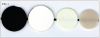
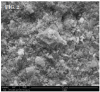
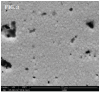
Once printed, the green body must be converted into a dense ceramic through two sequential thermal stages. Figure 1 illustrates these stages for printed 3YSZ, progressing from the green body to the fully sintered body. During debinding, the organic constituents are removed by controlled heating. Figure 2 shows the zirconia particles after printing, in which they are held together by binder, while Figure 3 shows the zirconia particles after binder removal and sintering. Thermogravimetric analysis shows that decomposition of the cured binder begins near 260°C and is essentially complete by approximately 487°C, with the residual mass that remains, about 85%, corresponding to the zirconia fraction.13 Because the bulk of the organic mass is lost across this window, the heating rate through it is kept very low, on the order of 0.025°C/min in one protocol, with isothermal holds, so that the gases evolved during decomposition can escape without disrupting the part.13 To minimize cracking and residual porosity, debinding is commonly performed in two phases: an initial vacuum or nitrogen phase that slows polymer decomposition, followed by an air phase that eliminates residual carbon.13,16 If debinding is too rapid or incomplete, trapped decomposition products expand and generate residual porosity and cracking, a risk that is greatest in thicker sections.13 Such residual porosity carries through to the fired restoration, where it lowers density and contributes to the reduced strength and translucency that distinguish printed zirconia from its milled counterpart.17 The resulting porous structure, termed a brown body, is then sintered at approximately 1450°C to 1500°C, during which the zirconia particles fuse into a dense, monolithic ceramic.13,15 The post-processing sequence is time- and equipment-intensive, with debinding and sintering together requiring up to several days and specialized furnaces, which currently favors centralized laboratory production over chairside fabrication.13 A recent study demonstrated an ultrafast debinding approach utilizing vacuum-assisted debinding and rapid heating through porous graphite felts, reducing binder removal time to approximately 30 minutes without compromising the mechanical properties of the zirconia.18
A defining challenge of this workflow is the dimensional change that accompanies firing. Sintering is associated with approximately 22% to 25% linear shrinkage, and because this shrinkage is anisotropic, being greater along the build (z) axis than in the x and y directions, it must be precisely compensated for in the digital design so that the final restoration achieves its intended dimensions.13
Two printing parameters in particular govern how closely additively manufactured zirconia approaches the performance of milled material: build orientation and layer thickness. Orientation matters because the interlayer interfaces are the structurally weakest planes of the part. When the layers are oriented so that masticatory load acts across these interfaces (the 90° orientation), weak interlayer adhesion and interlayer voids reduce strength; when the layers are aligned so that the part behaves more like a monolithic block under load (the 0° orientation), strength approaches that of milled zirconia.15 Layer thickness reflects a related compromise: thicker layers weaken interlayer bonding and promote intralayer defects, whereas excessively thin layers multiply the number of interfaces, so an intermediate value is sought. In the pooled analysis, printed zirconia at both 25 μm and 50 μm remained below milled zirconia in flexural strength, indicating that orientation and process refinement, rather than layer thickness alone, drive the comparison.15 Underlying both variables is the difficulty of uniformly recoating a highly loaded, viscous suspension between layers within the printer; non-uniform recoating is a principal source of poor layer adhesion and interlayer porosity, and incomplete light penetration during curing compounds these defects.14,15 Build orientation and support design additionally affect dimensional accuracy and the need for post-print support removal, and must be optimized for each system.11,15
Orientation also matters at a later stage that is easy to overlook. Independent of how the part is printed, the orientation in which it is positioned in the furnace during sintering affects its mechanical properties. When the printed layers lie parallel to the horizontal plane during firing, gravity and internal stresses promote tighter interlayer bonding, whereas perpendicular orientations leave looser grain boundaries and more internal microdefects.19 In one comparison, specimens sintered with their layers parallel to the horizontal plane reached a three-point flexural strength near 790 MPa, compared with approximately 560 MPa and 425 MPa for two perpendicular orientations, despite no significant differences in shrinkage, density, phase composition, or grain size.19 Controlling sintering placement, including the use of supporting media such as alumina beads for complex geometries, is therefore an additional processing variable to manage.19
Evidence for Material Properties
Mechanical Strength
Reported strength values for printed zirconia have improved as the technology has matured. Early evaluations found that additively manufactured zirconia exhibited slightly lower flexural strength than milled zirconia, although values remained within clinically acceptable limits.20,21 More recent work has been more favorable. A study of contemporary commercial printed zirconia reported flexural strength exceeding that of milled zirconia.22 Differences have also been observed between printing systems, with higher strength reported for zirconia produced using a SLA system than a LCD-based ceramic manufacturing system; however, this difference may have been influenced by variations in print orientation rather than by the technology itself.12,22 Systematic reviews and meta-analyses of flexural strength and Weibull modulus have likewise concluded that printed zirconia can approach or match the mechanical performance of milled zirconia, while emphasizing that outcomes are highly dependent on fabrication and post-processing variables.20,21 The wide range of reported values reflects heterogeneity in printers, build orientation, slurry composition, and sintering protocols across studies, which complicates direct comparison.20,21
Optical Properties
Esthetic performance remains a relative weakness of printed zirconia. Multiple investigations have reported that the translucency of printed zirconia is significantly lower than that of milled zirconia.23,24 This reduced translucency has been attributed primarily to residual microporosity within the printed and sintered microstructure, which scatters light.24 As with milled zirconia, translucency also depends on the yttria content of the formulation, with higher-yttria compositions generally more translucent than lower-yttria compositions.23 Because translucency and strength are governed in part by the same microstructural features, formulations optimized for esthetics may sacrifice some strength, mirroring a tradeoff well recognized for milled zirconia.23,24 Continued refinement of slurry formulation and sintering protocols to reduce porosity is therefore a priority if printed zirconia is to match the esthetics of established milled materials.24
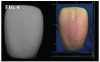
Aside from translucency limitations, 3D-printed zirconia restorations often exhibit a stair-step effect, characterized by visible layer lines on the surface resulting from the layer-by-layer fabrication process (Figure 4).18 These surface irregularities can adversely affect surface quality and esthetics. Recent studies have demonstrated that optimization of printer slicing parameters can reduce these artifacts. Specifically, increasing anti-aliasing levels smooths the transition between printed layers, resulting in improved surface trueness and significantly lower surface roughness.25
Dimensional Accuracy
The dimensional accuracy and marginal adaptation of printed zirconia restorations are strongly affected by the large sintering shrinkage and by print orientation. Early reports indicated that printed zirconia crowns demonstrated slightly lower accuracy and adaptation than milled counterparts, though within clinically acceptable ranges.26 A recent systematic review and meta-analysis of in vitro studies provided a more quantitative comparison, pooling nine studies that together evaluated 284 zirconia complete-coverage restorations fabricated by milling and 3D printing.27 Both fabrication methods produced marginal fit and internal adaptation within the commonly cited clinical acceptability threshold of approximately 120 μm.27 However, milled zirconia exhibited a statistically smaller marginal gap than printed zirconia, with a pooled mean difference of approximately 13 μm, whereas internal adaptation did not differ significantly between the two techniques.27 The choice of additive technology also mattered, as SLA generally produced better marginal and internal adaptation than DLP.27
The advantage of milling was most pronounced for multiunit restorations. In the single included study of four-unit fixed dental prostheses, printed frameworks showed substantially larger discrepancies than milled frameworks, with marginal gaps reaching several hundred micrometers in some printed groups, which was attributed to the cumulative effects of polymerization shrinkage, sintering distortion, and layer misalignment across a longer span.27 Because the pooled analyses showed substantial heterogeneity, these results should be interpreted as indicating the overall direction of the difference rather than a precise magnitude; accuracy remains highly dependent on material formulation, printer resolution, shrinkage compensation, and post-processing, and milling currently remains the more predictable option, particularly for long-span frameworks.26,27
Current Clinical Status
Despite encouraging laboratory results, printed zirconia remains an emerging technology. Commercial systems are available, but the multi-day, furnace-dependent post-processing sequence largely confines fabrication to specialized laboratories rather than the dental office.13 Moreover, the majority of supporting evidence derives from in vitro investigations, and long-term clinical data on printed zirconia restorations are limited.5,6 Clinicians considering this technology should therefore regard it as promising but not yet a validated replacement for milled zirconia in routine definitive care.5
Conclusion
The materials presently used for definitive 3D-printed crowns are highly filled resin composites whose strength and stiffness fall well below those of milled ceramics. Additive manufacturing of zirconia offers a means of combining the recognized workflow and economic advantages of printing with the mechanical and biological performance of a high-strength ceramic. Current production relies on vat photopolymerization of a zirconia slurry followed by debinding and high-temperature sintering, a sequence that introduces substantial shrinkage and requires specialized equipment and considerable time. The available evidence indicates that printed zirconia has progressed from slightly inferior to comparable, and, in some contemporary materials, superior, flexural strength relative to milled zirconia; both techniques achieve clinically acceptable fit, although milled zirconia retains an advantage in marginal accuracy, especially for multiunit frameworks, and reduced translucency from residual microporosity remains to be resolved. As slurry chemistry, printing hardware, and post-processing protocols continue to advance, additively manufactured zirconia has the potential to become a clinically viable definitive ceramic; however, well-designed clinical trials and standardized protocols are needed to confirm its long-term performance.
References
1. Drevenstedt G. 3D printing comes of age: Key findings from the NADL dental technology survey. Journal of Dental Technology. 2023:1–3.
2. Council on Scientific Affairs, Revilla-León M, Frazier K, Costa Jd, Haraszthy V, Ioannidou E, et al. Prevalence and applications of 3-dimensional printers in dental practice: An American Dental Association clinical evaluators panel survey. J Am Dent Assoc. 2023;154:355–356.e2.
3. Bora PV, Sayed Ahmed A, Alford A, Pitttman K, Thomas V, Lawson NC. Characterization of materials used for 3d printing dental crowns and hybrid prostheses. J Esthet Restor Dent. 2024;36:220–230.
4. Sabanik P, Liu TC, Tabatabaeian M, Rocha MG, Surathu N, Lawson NC. A review of current systems, materials, and protocols for 3d-printed splints, crowns, and dentures. J Esthet Restor Dent. 2026;38:635–651.
5. Lin WS, Chen L, Alfaraj A. 3d-printed zirconia and lithium disilicate in dentistry and their clinical applications. Int J Prosthodont. 2025;38:12–26.
6. Al Hamad KQ, Al-Rashdan BA, Ayyad JQ, Al Omrani LM, Sharoh AM, Al Nimri AM, et al. Additive manufacturing of dental ceramics: A systematic review and meta-analysis. J Prosthodont. 2022;31:e67–e86.
7. Daher R, Ardu S, di Bella E, Krejci I, Duc O. Efficiency of 3d printed composite resin restorations compared with subtractive materials: Evaluation of fatigue behavior, cost, and time of production. J Prosthet Dent. 2024;131:943–950.
8. Barndt PR, Sterlitz SJ, Fasbinder DJ. Tooth preparation considerations for CAD/CAM materials in restorative dentistry. Decisions in Dentistry. 2020.
9. Zhao W, Li Y, Wei C, Li S, Sun X, Li C. Advances in patterned interface design and bonding performance of 3d-printed dental zirconia ceramics: A review. J Mater Chem B. 2026;14:3371–3382.
10. Caussin E, Moussally C, Le Goff S, Fasham T, Troizier-Cheyne M, Tapie L, et al. Vat photopolymerization 3D printing in dentistry: A comprehensive review of actual popular technologies. Materials (Basel). 2024;17.
11. Galante R, Figueiredo-Pina CG, Serro AP. Additive manufacturing of ceramics for dental applications: A review. Dent Mater. 2019;35:825–846.
12. Schwentenwein M, Homa J. Additive manufacturing of dense alumina ceramics. Int J Appl Ceram Technol. 2015;12:1–7.
13. Mohammed MK, Alahmari A, Alkhalefah H, Abidi MH. Evaluation of zirconia ceramics fabricated through dlp 3d printing process for dental applications. Heliyon. 2024;10:e36725.
14. Wang L, Yu H, Hao Z, Tang W, Dou R. Investigating the effect of solid loading on microstructure, mechanical properties, and translucency of highly translucent zirconia ceramics prepared via stereolithography-based additive manufacturing. J Mech Behav Biomed Mater. 2023;144:105952.
15. Hofer AK, Rabitsch J, Jutrzenka-Trzebiatowska D, Hofstetter C, Gavalda-Velasco I, Schlacher J, et al. Effect of binder system on the thermophysical properties of 3d-printed zirconia ceramics. Int J Appl Ceram Technol. 2022;19:174–180.
16. He R, Liu W, Wu Z, An D, Huang M, Wu H, et al. Fabrication of complex-shaped zirconia ceramic parts via a DLP stereolithography-based 3d printing method. Ceramics International. 2018;44:3412–3416.
17. Ruggiero MM, Souza LVS, Magno MB, Song X, Maia LC, Cury A, et al. Is additive manufacturing of dental zirconia comparable to subtractive methods when considering printing orientation and layer thickness? A systematic review and meta-analysis. J Esthet Restor Dent. 2026;38:604–634.
18. Mosadegh M, Khakzad M, Sepasi Z, Nandigama K, Kumar G, Minary-Jolandan M. Single-step thermal debinding for ceramics vat photopolymerization in less than 30 minutes. Ceramics International. 2025;51:34846–34857.
19. Jia Q, Kim SH, Xu Y, Ma C, Kim KM, Jiang HB, et al. Mechanical properties and microstructure of 3d-printed zirconia based on sintering placement orientation. Int Dent J. 2025;75:103972.
20. Pinelli LAP, Ferreira I, Reis ACD. Analysis of flexural strength and Weibull modulus of printed and milled zirconia: A systematic review. J Prosthet Dent. 2025;134:628.e1–628.e8.
21. Frąckiewicz W, Szymlet P, Jedliński M, Światłowska-Bajzert M, Sobolewska E. Mechanical characteristics of zirconia produced additively by 3d printing in dentistry - a systematic review with meta-analysis of novel reports. Dent Mater. 2024;40:124–138.
22. Nakai H, Inokoshi M, Nozaki K, Komatsu K, Kamijo S, Liu H, et al. Additively manufactured zirconia for dental applications. Materials (Basel). 2021;14.
23. Hetzler S, Schmitt C, Rammelsberg P, Rues S, Zenthöfer A. Translucency of 3d-printed 3y- and 5y-doped zirconia. J Esthet Restor Dent. 2025.
24. Ruggiero MM, Lim CH, Giugliano TS, Choi M, Cury A, Zhang Y. Balancing strength and translucency: The role of microstructure in additive and subtractive dental zirconia. Dent Mater. 2025;41:690–698.
25. Son K, Lee JM, Jang KJ, Hwang JH, Lee JH, Kim HD, et al. Influence of anti-aliasing and pixel offset slicing parameters on dimensional accuracy and surface characteristics of digital light processing printed monolithic zirconia crowns: An in vitro study. J Prosthet Dent. 2026.
26. Pinelli LAP, Ferreira I, Cândido Dos Reis A. Accuracy and adaptation of 3d printed zirconia crowns: A review of current methodologies. J Prosthet Dent. 2025;134:2146–2155.
27. Sengottaiyan AK, Bennani V, Veerasamy A. Marginal fit and internal adaptation of zirconia complete coverage fixed dental prostheses fabricated by milling versus 3d printing: A systematic review and meta-analysis of in vitro studies. J Prosthet Dent. 2026.
Mahmoudreza Tabatabaeian
Division of Biomaterials
UAB School of Dentistry
Birmingham, Alabama
Pouya Sabanik, DDS
Division of Biomaterials
UAB School of Dentistry
Birmingham, Alabama
Nathaniel C. Lawson,
DMD, PhD
Division of Biomaterials
UAB School of Dentistry
Birmingham, Alabama