You must be signed in to read the rest of this article.
Registration on CDEWorld is free. Sign up today!
Forgot your password? Click Here!
Consider the following clinical scenario that is no longer hypothetical: a general dentist reviews a routine bitewing series and interprets the images as unremarkable, and months later the patient returns in pain. The cause is an interproximal lesion that was subtly visible on the earlier radiographs. At the time of the original examination, a US Food and Drug Administration (FDA)–cleared artificial intelligence (AI) caries-detection tool was available. Published meta-analyses had reported pooled sensitivity of 0.94 for approximal lesions.1 The dentist did not use the tool. Whether that decision constitutes a departure from the standard of care is a question the profession now faces.
The standard of care is not a fixed line. It represents the treatment a reasonably competent practitioner would provide under similar clinical circumstances. The standard of care evolves as scientific evidence and technological capability advance. This evolutionary principle is well established in healthcare jurisprudence. The 1974 Washington Supreme Court decision in Helling v. Carey held an ophthalmologist liable for failing to perform glaucoma testing on a younger patient, concluding that reasonable prudence (not mere adherence to professional custom) defined the standard of care when a simple, accurate diagnostic test was available.2 Although dental courts apply this principle with varying deference to professional custom, Helling illustrates a central truth: the availability of validated diagnostic technology can transform optional tools into professional obligations.
Dental imaging illustrates the same pattern. The transition from film to digital radiography, and subsequently from panoramic imaging to cone-beam computed tomography (CBCT) for complex implant planning, followed recognizable arcs: innovation, accumulating evidence, professional guidance, and eventual redefinition of competent practice.3 AI represents the next stage of this progression. Deep learning algorithms built on convolutional neural networks (CNNs) analyze radiographic datasets, detect pathology, segment anatomy, and support clinical decision-making with measurable accuracy.4,5 The pace of this transition—more than 44 FDA-cleared dental AI devices commercially available, with 18 new clearances in 2025 alone—warrants careful examination.6
Over the past year, Compendium has addressed AI in both dental education7 and clinical applications.8 This article focuses on the intersection of clinical evidence and the medicolegal framework through which AI availability may redefine professional accountability.
Evolution of Technological Standards in Dentistry
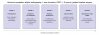
The pathway from innovation to standard practice follows a recognizable sequence: a technology is introduced by early adopters; clinical evidence accumulates through case series, comparative studies, and systematic reviews; professional organizations issue position statements; adoption costs decline; and at some point the prevailing standard of care shifts to incorporate the technology. Non-adoption may become harder to justify in selected high-evidence clinical contexts. This is particularly true when adverse outcomes involve findings that validated AI tools are designed to detect (Figure 1).
Digital radiography followed this trajectory over approximately two decades. Early concerns centered on image quality and reimbursement. Those concerns gave way to evidence of equivalent or superior diagnostic yield with reduced radiation exposure. Guided implant surgery transitioned from experimental to mainstream as systematic reviews documented improved positional accuracy compared with freehand placement.9 CBCT for complex implant planning followed the same arc, with 3-dimensional visualization of anatomy demonstrating measurable reductions in surgical complications.
Each transition shared common characteristics: objectively measurable clinical benefit, evidence evolving from anecdotal to systematic, decreasing adoption costs, and, most notably, a critical mass of evidence that made non-adoption progressively difficult to justify when adverse outcomes occurred. AI-assisted diagnostic tools appear to be entering the same cycle, but on a compressed timeline. CBCT required roughly two decades to become routine in complex implant planning. AI diagnostic tools have accumulated a substantial evidence base within 5 years of initial FDA clearance.
Current Evidence: AI Applications Across Dental Disciplines
Caries Detection
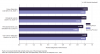
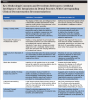
Caries detection on bitewing and periapical radiographs represents the most mature commercial application of dental AI. Mohammad-Rahimi and colleagues conducted a systematic review of 42 deep learning studies across multiple imaging modalities, reporting accuracy from 68% to 99%, although only 11 studies demonstrated low risk of bias across all QUADAS-2 domains, an important signal of methodological heterogeneity in the early literature (Table 1; Figure 2).10
More recent meta-analyses have refined these estimates. Carvalho and colleagues pooled 21 studies on approximal caries detection. They reported pooled sensitivity of 0.94 and specificity of 0.91 and recommended AI as a first-step screening tool with clinician verification.1
Periapical Pathology and CBCT
Sadr and colleagues published a meta-analysis in the Journal of Endodontics evaluating AI detection of periapical radiolucent lesions, reporting pooled sensitivity of 0.925 and specificity of 0.852. GRADE assessment yielded a high certainty of evidence rating. Among the dental AI meta-analyses reviewed here, this represents one of the strongest reported certainty ratings.11 In CBCT interpretation, Ezhov and colleagues demonstrated that AI-aided clinicians achieved significantly higher diagnostic sensitivity than unaided clinicians (0.854 vs. 0.767, P = .032) across 24 dentists interpreting 30 CBCTs, providing direct evidence that AI augments rather than replaces human performance.12
Periodontal Bone Loss Assessment
Patil and colleagues published a systematic review in The Journal of the American Dental Association confirming AI efficacy in detecting periodontal bone loss and classifying periodontal disease severity from panoramic and intraoral radiographs.13 A subsequent meta-analysis using the APPRAISE-AI critical appraisal tool reported pooled sensitivity of 0.88 and specificity of 0.82. That performance is sufficient to support clinical screening applications, particularly in high-volume general practice.14
Orthodontic and Cephalometric Applications
Automated cephalometric landmark identification is among the most extensively studied AI applications in orthodontics. Hendrickx and colleagues conducted an updated systematic review and meta-analysis of 34 studies, finding a mean landmark detection error of 1.39 mm (below the clinically accepted 2 mm threshold), with processing completed in under 1 minute versus 15 to 20 minutes for manual tracing.15
Implant Planning and Robotic Surgery
AI-based CBCT segmentation has demonstrated reliable automated identification of the mandibular canal, maxillary sinus, and alveolar bone morphology. Ntovas and colleagues compared AI-driven with manual mandibular canal segmentation in 104 patients. AI segmentation proved both time-efficient and clinically reliable for preoperative planning.16
Robotic-assisted implant surgery couples AI planning with physical robotic execution. Wu and colleagues produced the first pooled meta-analysis, analyzing eight clinical studies encompassing 242 implants and concluding that robotic systems demonstrate suitable positional accuracy with no reported obvious patient harm.17 The largest published clinical series, reported by Neugarten, documented 273 implants placed in 108 patients using a haptic robotic platform, with mean angular deviation below 1.5 degrees and depth deviation below 0.2 mm, which is superior to published data for static guides, dynamic navigation, and freehand placement.18 Several robotic platforms are currently available in the United States and European markets.
Oral Pathology Screening
Early detection of oral potentially malignant disorders represents a high-stakes application where AI may address screening gaps. Warin and colleagues demonstrated that deep CNNs achieved precision of 91% to 92%, recall of 89% to 98%, and area under the curve of 95% for classifying oral potentially malignant disorders from clinical photographs, suggesting potential utility for accessible screening in settings where specialist access is limited.19
The Regulatory Landscape: FDA-Cleared AI Dental Devices
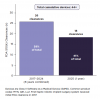
Commercialization of dental AI has accelerated substantially. As of late 2025, more than 44 AI-enabled dental devices had received FDA 510(k) clearance, with 18 clearances in 2025 alone—approximately 41% of all dental AI clearances ever issued (Figure 3).6,20 Virtually all cleared devices are Class II Software as a Medical Device (SaMD). They typically fall under FDA product codes MYN, QIH, or LLZ. Current platforms detect caries, periapical radiolucencies, calculus, periodontal bone levels, and key anatomical structures. These devices work on both 2-dimensional radiographs and 3-dimensional CBCT volumes. A haptic robotic implant surgery system received initial FDA clearance in 2017 with subsequent expanded indications. Adoption rates remain moderate: approximately 35% of US dentists have integrated AI tools into practice workflows, with higher adoption among early-career clinicians and group practices.21
A critical gap exists between regulatory clearance and independent scientific validation. A recent narrative review documented that most FDA-cleared dental AI products lack rigorous, independent peer-reviewed accuracy studies, with most published performance evidence originating from manufacturer-sponsored research.20 This has significant implications for standard-of-care analysis. FDA 510(k) clearance establishes substantial equivalence to a predicate and basic safety; it does not establish the level of independent clinical evidence typically required before professional organizations recommend widespread adoption. Practitioners evaluating commercial AI tools face a key distinction. Regulatory clearance is necessary but not sufficient. What matters next is the depth of independent validation that supports confident clinical deployment.
Medicolegal Implications: The Emerging Duty to Use AI
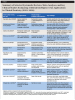
Liability is the most consequential dimension of this transition. It is also the dimension least familiar to most practicing clinicians. The fundamental question can be stated directly. When a validated AI tool is commercially available and matches or exceeds the diagnostic accuracy of the average clinician, does failure to use it constitute a departure from the standard of care (Table 2)?
Price et al addressed this in JAMA, noting that AI’s opaque decision-making, ie, the “black box” problem, creates a dual-sided liability landscape. A clinician may face exposure for relying on AI recommendations he or she cannot fully explain, yet may simultaneously face exposure for ignoring available tools that could have prevented patient injury.22 This has no clean parallel in earlier diagnostic technologies. Maliha and colleagues provided the most thorough analysis of the liability ecosystem in the Milbank Quarterly, examining malpractice, vicarious liability, product liability, and the learned intermediary doctrine as applied to AI, and proposing structural reforms such as altered standards of care and AI-specific professional liability frameworks.23
The most directly actionable evidence comes from Tobia et al, whose team conducted the first empirical study of AI liability using jury simulation with 2,000 US adults. Participants evaluated cases in which a clinician either followed or rejected an AI recommendation. The findings were striking: accepting a standard-care AI recommendation measurably reduced perceived liability, while rejecting AI advice provided no corresponding protective effect—even when the clinician’s independent judgment proved clinically correct.24 The empirical data suggest that juror intuitions may already tilt toward AI adoption. However, these findings should be interpreted cautiously because they are based on jury simulation involving members of the general public rather than actual jurors deliberating real dental malpractice cases. Although jury simulation is a well-established research method for studying legal decision-making, it cannot fully replicate the complexity of courtroom proceedings, judicial instructions, expert testimony, or case-specific facts. Accordingly, these results should be viewed as preliminary evidence of evolving public perceptions rather than definitive predictors of legal outcomes. Practitioners who decline to use available, validated AI tools may therefore face potential—but not yet established—medicolegal exposure as the legal landscape continues to evolve.
Cestonaro and colleagues confirmed in a PRISMA-compliant systematic review that no unanimous legal framework yet exists for AI diagnostic liability, leaving open fundamental questions regarding informed consent, apportionment of liability between clinicians and manufacturers, and the fiduciary dimensions of AI-mediated care.25 Dental-specific case law remains sparse, which itself is a significant finding. The profession currently operates in a narrow window. Thoughtful engagement through practice guidelines, educational initiatives, and organizational statements can shape how courts ultimately evaluate dental AI claims. This window will not remain open indefinitely.
Limitations, Risks, and Ethical Considerations
AI integration is not without serious challenges. These must be addressed before widespread adoption becomes part of the standard of care. Several challenges are unique to AI, without close parallel in earlier technologies.
Automation Bias
Automation bias—the tendency to uncritically accept computer-generated recommendations—is a well-documented phenomenon in clinical decision support. Goddard and colleagues identified two error forms in their systematic review. Commission errors involve following incorrect AI advice; omission errors involve failing to act on findings AI did not flag.26 Both are directly relevant to AI-assisted radiograph interpretation. The clinical implication is counterintuitive: the more accurate an AI tool, the more vulnerable clinicians may become to uncritical reliance.
Algorithmic Bias and Health Equity
Allareddy and colleagues documented a recurring pattern. Current AI models in orthodontics and craniofacial applications are frequently built on homogeneous datasets that underrepresent ethno-racial minorities. When deployed in diverse populations, such models may perform unevenly across patient groups, potentially amplifying existing oral health disparities rather than mitigating them.27 Elani and Giannobile have argued that dentistry is uniquely positioned to either address or exacerbate oral health disparities through AI, depending on how tools are validated and deployed.21
Data Privacy, Interoperability, and Cost
Additional practical concerns merit consideration. Cloud-based AI platforms process protected health information. Health Insurance Portability and Accountability Act (HIPAA) applies in the United States and General Data Protection Regulation (GDPR) in the European Union. Both require careful evaluation of data-handling agreements. Interoperability with existing practice management and imaging software remains uneven. Cost-effectiveness requires analysis against marginal diagnostic yield, particularly for smaller practices. AI literacy among practitioners must be developed through continuing education.
Proposed Guidelines for Responsible AI Integration
Drawing on the current evidence and the positions of major professional organizations, including the FDI World Dental Federation,28 American Dental Association,29 and World Health Organization,30 the following guidelines are proposed for responsible integration of AI into dental practice:
AI should augment, not replace, clinical judgment. AI tools should function as decision support that extends the clinician’s diagnostic reasoning. The practitioner retains final responsibility for diagnostic and treatment decisions. AI findings must be interpreted within the context of each patient’s complete clinical presentation and history. The clinician’s own concurring or differing judgment should be documented.
AI-generated analyses should be documented in the clinical record and include AI tool name, version, output (findings/probabilities), and how the clinician interpreted or acted on the output. AI-assisted findings should be documented within treatment planning records. This supports clinical continuity and risk management. It also creates a contemporaneous record of diagnostic information available at the time of decision-making, which carries growing weight given the evolving medicolegal framework.
Only appropriately cleared AI systems should be used with the scrutiny of independent validation. Clinicians should deploy only tools that have received relevant regulatory clearance (FDA 510(k) or Conformité Européenne [CE] marking) and should critically evaluate whether independent peer-reviewed validation exists beyond manufacturer-sponsored studies.
Clinicians should invest in AI literacy through continuing education, as effective and safe AI use requires understanding of model capabilities, limitations, and failure modes, particularly automation bias. Dental education programs, continuing education providers, and professional organizations should prioritize AI literacy training to prepare current and future practitioners for evolving standard-of-care expectations.
Practitioners should advocate for equitable validation and deployment. AI systems should undergo rigorous validation using diverse, multicenter clinical datasets before widespread adoption, with particular attention to equitable performance across patient demographics to avoid perpetuating oral health disparities. Unexpected performance gaps between demographic subgroups should be reported to the manufacturer.
Conclusion
Artificial intelligence has progressed from theoretical promise to demonstrable clinical utility across multiple dental disciplines. Systematic reviews and meta-analyses consistently document diagnostic performance that approaches or, in specific tasks, exceeds that of the average clinician. More than 44 FDA-cleared products are commercially available.
Emerging liability research suggests that juror perceptions may increasingly favor clinicians who incorporate validated AI decision-support tools into routine workflows. Although dental-specific legal precedent remains limited, this trajectory points toward validated AI tools transitioning, over time, from optional enhancements to expected components of competent practice. This transition, however, has not yet fully occurred, as only approximately 35% of US dentists have adopted AI tools21 and independent validation of commercial products remains incomplete.20 No established legal precedent has definitively identified AI use as a required component of the dental standard of care.
Dentistry is at a pivotal moment. AI has not yet fully redefined the standard of care, but the trajectory is clear. The profession has a narrow window to shape AI’s integration responsibly, ensuring improved patient outcomes while preserving clinical judgment and professional accountability.
ABOUT THE AUTHORS
Ronald D. Perry, DMD, MS
Professor, Department of Comprehensive Care, and Director, International
Student Program, Tufts University School of Dental Medicine, Boston, Massachusetts
Driss Zoukhri, PhD
Professor, Department of Comprehensive Care, Tufts University School of Dental Medicine, Boston, Massachusetts
Volodymyr Kachmar, DMD Candidate
International Dental Student Program, Tufts University School of Dental Medicine, Boston, Massachusetts
Enxhi Subashi, DMD Candidate
International Dental Student Program, Tufts University School of Dental Medicine, Boston, Massachusetts
Queries to the author regarding this course may be submitted to
authorqueries@conexiant.com.
REFERENCES
1. Carvalho BKG, Nolden EL, Wenning AS, et al. Diagnostic accuracy of artificial intelligence for approximal caries on bitewing radiographs: a systematic review and meta-analysis. J Dent. 2024;151:105388.
2. Helling v Carey. 83 Wash 2d 514, 519 P2d 981 (1974).
3. Scarfe WC, Farman AG, Sukovic P. Clinical applications of cone-beam computed tomography in dental practice. J Can Dent Assoc. 2006;72(1):75-80.
4. Schwendicke F, Samek W, Krois J. Artificial intelligence in dentistry: chances and challenges. J Dent Res. 2020;99(7):769-774.
5. Shan T, Tay FR, Gu L. Application of artificial intelligence in dentistry. J Dent Res. 2021;100(3):232-244.
6. Naved N, Adnan S, Umer F. Development trend of artificial intelligence (AI) in dentistry: exploring FDA-cleared dental devices. BMC Oral Health. 2026;26(1):11.
7. Perry R, Singh G, Dame A, et al. The integration of artificial intelligence and augmented reality in dental education: current applications and future potential. Compend Contin Educ Dent. 2025;46(5):216-222.
8. Blatz MB. The role of artificial intelligence in clinical dentistry: current applications and future perspectives. Compend Contin Educ Dent. 2025;46(10):474-480.
9. Tahmaseb A, Wu V, Wismeijer D, et al. The accuracy of static computer-aided implant surgery: a systematic review and meta-analysis. Clin Oral Implants Res. 2018;29(suppl 16):416-435.
10. Mohammad-Rahimi H, Motamedian SR, Rohban MH, et al. Deep learning for caries detection: a systematic review. J Dent. 2022;122:104115.
11. Sadr S, Mohammad-Rahimi H, Motamedian SR, et al. Deep learning for detection of periapical radiolucent lesions: a systematic review and meta-analysis of diagnostic test accuracy. J Endod. 2023;49(3):248-261.e3.
12. Ezhov M, Gusarev M, Golitsyna M, et al. Clinically applicable artificial intelligence system for dental diagnosis with CBCT. Sci Rep. 2021;11(1):15006.
13. Patil S, Joda T, Soffe B, et al. Efficacy of artificial intelligence in the detection of periodontal bone loss and classification of periodontal diseases: a systematic review. J Am Dent Assoc. 2023;154(9):795-804.e1.
14. Khubrani YH, Thomas D, Slator PJ, et al. Detection of periodontal bone loss and periodontitis from 2D dental radiographs via machine learning and deep learning: systematic review employing APPRAISE-AI and meta-analysis. Dentomaxillofac Radiol. 2025;54(2):89-108.
15. Hendrickx J, Gracea RS, Vanheers M, et al. Can artificial intelligence-driven cephalometric analysis replace manual tracing? A systematic review and meta-analysis. Eur J Orthod. 2024;46(4):cjae029.
16. Ntovas P, Marchand L, Finkelman M, et al. Accuracy of artificial intelligence-based segmentation of the mandibular canal in CBCT. Clin Oral Implants Res. 2024;35(9):1163-1171.
17. Wu XY, Shi JY, Qiao SC, et al. Accuracy of robotic surgery for dental implant placement: a systematic review and meta-analysis. Clin Oral Implants Res. 2024;35(6):598-608.
18. Neugarten JM. Accuracy and precision of haptic robotic-guided implant surgery in a large consecutive series. Int J Oral Maxillofac Implants. 2024;39(1):99-106.
19. Warin K, Limprasert W, Suebnukarn S, et al. Performance of deep convolutional neural network for classification and detection of oral potentially malignant disorders in photographic images. Int J Oral Maxillofac Surg. 2022;51(5):699-704.
20. Shujaat S, Aljadaan H, Alrashid H, et al. FDA-approved AI solutions in dental imaging: a narrative review of applications, evidence, and outlook. Int Dent J. 2026;76(1):109315.
21. Elani HW, Giannobile WV. Harnessing artificial intelligence to address oral health disparities. JAMA Health Forum. 2024;5(4):e240642.
22. Price WN 2nd, Gerke S, Cohen IG. Potential liability for physicians using artificial intelligence. JAMA. 2019;322(18):1765-1766.
23. Maliha G, Gerke S, Cohen IG, Parikh RB. Artificial intelligence and liability in medicine: balancing safety and innovation. Milbank Q. 2021;99(3):629-647.
24. Tobia K, Nielsen A, Stremitzer A. When does physician use of AI increase liability? J Nucl Med. 2021;62(1):17-21.
25. Cestonaro C, Delicati A, Marcante B, et al. Defining medical liability when artificial intelligence is applied on diagnostic algorithms: a systematic review. Front Med (Lausanne). 2023;10:1305756.
26. Goddard K, Roudsari A, Wyatt JC. Automation bias: a systematic review of frequency, effect mediators, and mitigators. J Am Med Inform Assoc. 2012;19(1):121-127.
27. Allareddy V, Oubaidin M, Rampa S, et al. Call for algorithmic fairness to mitigate amplification of racial biases in artificial intelligence models used in orthodontics and craniofacial health. Orthod Craniofac Res. 2023;26(suppl 1):124-130.
28. FDI World Dental Federation. Artificial intelligence in dentistry. Int Dent J. 2025;75(1):3-4.
29. American Dental Association. ADA releases report on AI in dentistry. ADA News. February 24, 2023. https://adanews.ada.org/ada-news/2023/february/ada-releases-report-on-ai-in-dentistry. Accessed August 4, 2026.
30. World Health Organization. Ethics and Governance of Artificial Intelligence for Health: WHO Guidance. Geneva: World Health Organization; 2021.