You must be signed in to read the rest of this article.
Registration on CDEWorld is free. Sign up today!
Forgot your password? Click Here!
Resin-based composites (RBC) were first introduced in dentistry as 2-paste dispensing systems, requiring proportioning and hand-mixing of small amounts of base and catalyst components.1 However, those products had setting times as long as 3 minutes to 5 minutes.2 Efforts were made to shorten this time by pre-heating uncured pastes or their mixtures, which proved successful,3 but no consensus or commercial products arose to provide standardized methodology and results. Flowable composites were introduced in the late 1980s as direct, esthetic, light-curable RBCs designed for easy placement and manipulation, with improved extrusion, wettability, and adaptation to preparation walls.4 During this time, special RBCs appeared for use in posterior teeth as “amalgam alternatives” that were very highly filled and extremely viscous materials (also known as condensable or packable composites).1 Flowable composites were used as the first increment prior to placing these more viscous materials in order to reduce the incidence of open gingival margins using these highly viscous materials. Composite product technology continued to develop, but clinicians were challenged with identifying a single product for both anterior and posterior restorative situations.
At the turn of the 21st century, dedicated manufactured devices were developed to pre-heat compules or syringes of light-curable RBC to precise temperatures. Many improvements to these devices have become available and are highly advocated mostly for their ease of RBC extrusion and possible enhancements in physical and mechanical properties of the resulting restoration. By thermally reducing the viscosity of a heavily filled, viscous resin composite, the clinician might believe that the filling material temporarily attains the lower viscosity of a flowable composite when heated and provides superior properties when light-cured owing to higher filler loading.
Many in vitro studies have been performed finding enhanced physical and mechanical properties of conventional resin composite when pre-heated. Yet, a closer look at many of those study results might question if such enhancements can be obtained using in vivo clinical conditions.
Effect of Heat on Physical Properties of Resin Composite
When uncured RBCs are heated, multiple properties are altered allowing the material to be more easily manipulated, and in theory, more intimately adapted to preparation walls. When heated to 54–68 °C, the material shows a significant decrease in viscosity (becomes less paste-like and “creamier”). Additionally, the heated material demonstrates a positive impact on preparation wettability, a property allowing the composite to flow more readily along all preparation surfaces, providing more intimate union with preparation floors and walls. These changes are the result of increased molecular kinetic energy causing monomers to distance themselves from each other, allowing them to more easily slide past one another, as well as to move around filler particles, which are not affected within this range of temperature.5
There is a limit, however, to which pre-heating of RBC provides beneficial results. It is true that isothermal heating of RBC above room temperature (and less than 68 ºC) results in enhanced extent of incorporation of monomers into the polymerized polymer network (also known as monomer conversion).5 Pre-heating at temperatures greater than 68 ºC results in a tremendous alteration in polymerization reaction kinetics. Such temperatures result in very high free radical mobility, leading to premature free radical termination (ie, the end of polymer chain formation), early vitrification (“hardening”), and high shrinkage stress values. Consequently, monomer conversion plateaus at these temperatures and above.6 In addition, there are concerns that a rise in pulpal temperature greater than 5.5 °C could lead to irreversible pulpitis when placing heated composite on dentin. Therefore, a heating limit is established to avoid this potential adverse effect.7
Pre-heating RBCs affect other restoration properties as well. A randomized controlled clinical trial showed that pre-heating composite reduced marginal discoloration and also enhanced color matching.8 Preheating RBC has also been shown in vitro to increase its depth of cure, providing a possible positive impact on restoration longevity.9
Relevant Studies
Numerous in vitro studies have been conducted attempting to simulate the clinical scenario in which resin composite is heated to ideal temperature before being extruded into a preparation and light cured to assess restoration properties and integrity. Class II preparations were assessed for restoration marginal integrity in extracted human molars filled using room temperature composite, preheated composite, flowable composite with room temperature composite, and flowable composite with preheated composite. Specimens were thermocycled and examined using scanning electron microscopy for marginal gaps. The results showed that composite preheated to 60 °C resulted in significantly lower marginal gap formation (approximately 13%) compared to room temperature, regular (approximately 27%) or flowable composite (approximately 24%). The in vitro study concluded that regardless of use of flowable composite, preheated RBC reduced marginal microleakage.5
A similar in vitro experiment was conducted using extracted human molars, except the restorations were analyzed using micro-CT to assess formation of an intact cavosurface margin using ammoniacal silver nitrate (AgNO3) as a tracer. Pre-heating RBC to 68 °C improved the cervical adaptation of all paste-like composites compared to conventional placement, except for the fiber-reinforced composite. All flowable resin composites showed higher silver nitrate penetration (higher microleakage) than their paste-like, pre-heated counterparts, indicating poorer marginal adaptation post-thermal aging.10
It is important to note that these in vitro studies aimed to reproduce an ideal clinical scenario. However, it is impossible to totally simulate live human teeth: to re-create dentinal fluid flow, pulpal blood flow, and moist dentin. Vital teeth act as heat sinks, rapidly cooling any restorative material that contacts the preparation surface.11 In addition, the contents rapidly cool as soon as they are removed from the heating device, resulting in lower applied pre-heated composite temperature than when heated in the warming device.
An in vivo experiment investigated the temperature of Class II preparation pulpal floors as room temperature or preheated composite was placed. The composite heating device was set to 60 °C, resulting in 54.7 °C composite temperature. Surprisingly, the preheated composite only led to a temperature increase of 6 °C to 8 °C on the pulpal floor of the preparation upon insertion, a value that was much lower than predicted. Following photocuring of the dentin bonding agent, the pulpal floor temperature averaged about 31 °C. Immediately upon placement of the preheated composite to the pulpal floor, its temperature averaged only 36.2 °C, indicating that the preheated composite rapidly cools during placement. The thermal mass of this “cold” tooth structure and its higher thermal diffusivity (ability to withdraw heat deep into its structure), approximately twice that of the pre-heated composite striking its surface, results in a rapid transfer of heat from the composite into tooth structure.12 Thus, it was thought that much of the improved physical and mechanical properties mentioned in the literature might not be realized clinically because the RBC was actually photocured at a much lower temperature clinically than to which it was initially heated.7
Although the exact effect of preheated composite cooling during placement remains difficult to quantify, an in vivo clinical study suggests that preheated resin composite can lead to better clinical outcomes. A 36-month long randomized clinical trial of preheated and room temperature resin composite compared 66 Class I nanofilled restorations and followed the FDI World Dental Federation evaluation criteria, based on aesthetic, functional, and biological properties. Of all criteria, less marginal staining was found using preheated RBC, which may be an indicator of less marginal leakage. Comparable clinical performance in other properties was found.13
Considering clinicians may reuse previously heated resin composite, a randomized controlled clinical trial assessed the clinical performance of Class II restorations fabricated using RBC that was repeatedly heated to 68 °C up to 10 times. Upon evaluation at 1, 3, 6, and 12 months, room temperature restorations exhibited relatively inferior clinical performance regarding marginal adaptation, marginal discoloration, and color matching when compared to preheated groups. Interestingly, no significant difference was found between resin composite that was preheated once versus up to ten times.8
Variety of Devices Currently Available
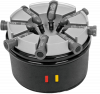
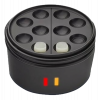
There are two general forms of products designed to pre-heat resin composites: “Warm-and-transfer” or “gun-warmed” that can be used to directly dispense warmed material. Figure 1 displays an example of the common configuration of a warm-and-transfer unit.
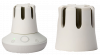
Some warm-and-transfer type units have a removable holder that can maintain the heated composite, so that the composite can be loaded into the dispensing device closer to the point of use, as seen in Figure 2. Such placement allows more rapid transfer of the heated material into the dispensing device, minimizing transfer cooling of the pre-heated compule.
A newer type of delivery system (gun-warmed) directly heats a compule and maintains its temperature at the end of a dispensing tip of a gun-style form factor, as seen in Figure 3.
Outside of devices specifically designed for warming composite, some clinicians report using wax pots or chairside overhead quartz-tungsten-halogen lights to warm composite.14 Problems associated with such warming devices include the lack of infection control as well as poor temperature regulation of the composite.
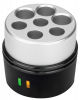
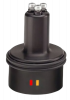
An additional advantage of warm-and-transfer devices is that they can often be adapted to warm alternate products besides composite compules, including composite syringes (Figure 4), anesthetic carpules (Figure 5), and as a holding/warming device for application and heat-maturation of silane applied to glass-based ceramic restorations (Figure 6).
However, the main disadvantage of this type of device, which is mitigated with use of gun-warmed units, is the loss of heat during transfer. Within 2 minutes of removal from warm-and-transfer unit, a 50% drop RBC heat was noted, and a 90% loss was observed after 5 minutes.15
Despite potential laboratory improvement in pre-heated RBC properties, an in vivo randomized controlled trial comparing these two warmed RBC delivery methods found no significant change in restoration quality after 2 years of follow-up and only noted the benefit of decreased working time using a heated dispenser.16
Alternate Uses of Pre-Heating Devices
As previously mentioned, the advantage of a warm-and-transfer device is that it can be used to warm anesthetic and syringes. Three out of four randomized clinical trials studied in a systematic review showed a statistically significant decrease in subjective measures of pain when anesthesia was warmed to 37° C prior to injection.17
Pre-Heated Composite as an Alternative for Resin Cements
Reports of using preheated resin composites to cement indirect restorations have been made in recent years, supposing that a higher filler content could increase the strength of cementation products. The higher viscosity of composite resins (in comparison to traditional resin cements) poses an issue that preheating theoretically could overcome. However, when evaluating microtensile bond strength and film thickness of the resin composites in comparison to traditional cementation agents, the bond strength was not significantly higher than traditional products. More importantly, the film thickness was higher than clinically acceptable.18 Higher film thickness can result in incomplete seating of the restoration, higher exposure of the cementation agent to the oral environment,19 poor marginal adaptation,20 and higher microleakage.21 Additionally, higher volumetric shrinkage was found with the resin composites than with resin cements.21 In conclusion, preheated resin composites should not be used as a method of cementing indirect restorations due to their increased film thickness and higher volumetric shrinkage in comparison with traditional resin cements. Additionally, it’s important to consider the possibility of pulpal trauma with the application of a heated material to a large surface area of the tooth. An excellent analysis of this topic provides further guidance.14
Other Important Factors to Consider
An important factor to consider is if the RBC is designed to be pre-heated. Manufacturer instructions for specific lines of composite will often state if the composite can be pre-heated or not. Some RBC brands may include components designed to accelerate the setting reaction of light cured RBC by taking advantage of the heat released by the polymerization exothermic reaction. Thus, use of such a material would result in the curing inadvertently beginning during the prewarming process. It is important both legally and restoratively to know if the composite is being used outside of manufacturer instructions.
Another consideration is the use of pre-heated flowable composite. Counter-intuitively, pre-heating flowable resin composite has minimal change to its chemical and physical properties. The viscosity of flowable resin composite has almost no change when pre-heated,22 and the degree of conversion can even be negatively impacted.23 In general, although preheating RBCs does reduce their viscosity, it is not lowered to the value seen when using flowable composites.
Conclusion
Pre-heating resin based dental composite is a popular,
proven method for reducing the effort needed for extruding viscous, filled
direct esthetic restorative materials. Much research has been published on
proposed improvement of physical and mechanical properties, such as lowered
viscosity and higher monomer conversion. A variety of instrument pre-heating
strategies exist, and the wise clinician will select a product and methodology
that minimizes the time between transferring composite from a warming device
and its delivery to the tooth surface. Precautions need to be heeded, as not
all resin-based composites are amenable to pre-heating. In general, pre-heating
resin composite as a resin cement substitute demands meticulous attention to
detail to avoid insufficient restoration seating. Theoretically pre-heating
resin composite offers significant potential advantages, however, the actual
clinical realization of these results has yet to be definitively
determined.
About the Authors
Anna Claire Parviainen
BS Chemistry, Augusta University Third year student
dentist
The Dental College of Georgia at Augusta University
Augusta, Georgia
Ruiyang Zhao
BS Biomedical Engineering,
Georgia Institute of Technology
Third year student dentist
The Dental College of Georgia at Augusta University
Augusta, Georgia
Hannah Kathrine Graham
BS Psychology, Augusta University
Third year student dentist
The Dental College of Georgia at Augusta University
Augusta, Georgia
Christian Rhoad
BS Biological Science
University of Georgia
Third year student dentist
The Dental College of Georgia at Augusta University
Augusta, Georgia
References
1. Ferracane JL. A Historical Perspective on Dental Composite Restorative Materials. J Funct Biomater. 2024;15(7):173.
2. New American Dental Association specification no. 27 for direct filling resins. Council on Dental Materials and Devices. J Am Dent Assoc. Jun 1977;94(6):1191-4.
3. Bausch JR, Delange C, Davidson CL. The influence of temperature on some physical properties of dental composites. J Oral Rehabil. 1981;8(4):309-317.
4. Bayne SC, Thompson JY, Swift EJ, Stamatiades P, Wilkerson M. A Characterization of First-generation Flowable Composites J Am Dent Assoc. 1998;129(5):567-577.
5. Elkady Y, Abdalla A, Hasan M. The Effect of Preheating and Flowable Composite on the Marginal Integrigy of Class II composite Resin Restorations. IOSR-JDMS. 2020;19(8):6-15.
6. Lohbauer U, Zinelis S, Rahiotis C, Petschelt A, Eliades G. The Effect of Resin Composite Pre-heating on Monomer Conversion and Polymerization Shrinkage. Dent Mater. 2009;25(4):514-519.
7. Rueggeberg F, Daronch M, Browning W, De Goes M. In Vivo Temperature Measurement: Tooth Preparation and Restoration with Preheated Resin Composite. J Esthet Restor Dent. 2010;22(5):314-322.
8. Elkady M, Abdelhakim S, Riad M. The Clinical Performance of Dental Resin Composite Repeatedly preheated: A randomized Controlled Clinical Trial. J Dent. 2024;144(104940):1-8.
9. Muñoz C, Bond P, Sy-Muñoz J, Tan D, Peterson J. Effect of Pre-heating on Depth of Cure and Surface Hardness of Light-polymerized Resin Composites. Am J Dent. 2008;21(4):215-222.
10. Demirel G, Irmak Ö, Buyuksungur A, Orhan K, Krejci I, Bortolotto T. Impact of composite consistency and pre-heating on cervical adaptation in class II restorations: a micro-CT evaluation. BMC Oral Health. 2025;25(1):1-10.
11. Lau X, Liu X, Chua H, Wang W, Dias M, Choi J. Heat generated during dental treatments affecting intrapulpal temperature: a review. Clin Oral Investig. 2023;27(5):2277-2297.
12. Watts D, McAndrew R, Lloyd C. Thermal Diffusivity of Composite Restorative Materials. J Dent Res. 1987;66(10):1576-1578.
13. Elkaffas A, Eltoukhy R, Elnegoly S, Mahmoud S. 36-Month Randomized Clinical Trial Evaluation of Preheated and Toom Temperature Resin Composite. Oper. Dent. 2022;47(1):11-19.
14. Lousan Do Nascimento Poubel D, Ghanem Zanon A, Franco Almeida J, Vicente Melo De Lucas Rezende L, Pimentel Garcia F. Composite Resin Preheating Techniques for Cementation of Indirect Restorations. Int J Biomater. 2022;2022:1-10.
15. Daronch M, Rueggeberg F, Moss L, De Goes M. Clinically Relevant Issues Related to Preheating Composites. J Esthet Restor Dent. 2006;18:340-350.
16. Favoretto M, de Souza Carneiro T, Naupari-Villasante R, et al. Clinical Performance of Preheating Thermoviscous Composite Resin for Non-carious Cervical Lesions Restoration: A24-month Randomized Clinical Trial. J Dent. 2024;144:1-10.
17. Tirupathi SP, Rajasekhar S. Effect of warming local anesthesia solutions before intraoral administration in dentistry: a systematic review. Journal of Dental Anesthesia and Pain Medicine. 2020;20(4):187.
18. Barbon FJ, Isolan CP, Soares LD, Bona AD, De Oliveira Da Rosa WL, Boscato N. A systematic review and meta-analysis on using preheated resin composites as luting agents for indirect restorations. Clinical Oral Investigations. 2022;26(4):3383-3393.
19. Layton D, Clarke M, Walton T. A Systematic Review and Meta-analysis of the Survival of Feldspathic Porcelain Veneers over 5 and 10 Years. Int J Prosthodont. 2012;25(6):590-603.
20. Yüksel E, Zaimoğlu A. Influence of marginal fit and cement types on microleakage of all-ceramic crown systems. Brazilian Oral Research. 2011;25(3):261-266.
21. Sampaio C, Barbosa J, Cáceres E, et al. Volumetric shrinkage and film thickness of cementation materials for veneers: An in vitro 3D microcomputed tomography analysis. J Prosthet Dent. 2016;117(6):784-791.
22. Loumprints N, Maier E, Belli R, Petschelt A, Eliades G, Lohbauer U. Viscosity and stickiness of dental resin composites at elevated temperatures. Dent Mater. 2021;37(3):413-422.
23. Lempel E, Őri Z, Szalma J, et al. Effect of exposure time and pre-heating on the conversion degree of conventional, bulk-fill, fiber reinforced and polyacid-modified resin composites. Dent Mater. 2019;35(2):217-228.